I've witnessed, with little understanding and empathy, the great lengths men have gone to turn my flesh into territory; and I've felt, with all those accompanying symptoms, this body’s chronic summons to appear again and again without fault; and those reflexes towards danger that have often left my muscles sore in confusion are equally reminders that I have yet to lose this body, and that my nature can still hear my heart. Some precedence of anonymity, no body has ever been so lucky. Not mine, nor another's. Not this shattered mirror for a face, nor another's.
Ultrasound waves are considered to be frequencies that exceed 20,000 sound wave cycles per second, making them undetectable to the human ear. These high frequencies carry the capacity to induce cellular vibration when applied directly to an exterior, deeply penetrating surfaces by way of intense microscopic movement.
In a medical setting, an instrument called a transducer — a handheld device whose probe is made of crystals that vibrate once under electrical stress — can be used to concentrate and project these frequencies into a localized area of the body, suffusing muscles and organs with traveling ultrasound. Once the directed ultrasound waves encounter viscera and tissue, they bounce off those internal surfaces and back towards the transducer's probe, which picks up the nuances of the echoed frequencies and converts them into electrical signals. These electrical signals are then read for their varying strengths and trajectories, and are then translated accordingly into glowing nodes of vibrancy and projected through a display monitor. This resulting image is termed a sonogram, a topographic map of the inside of a surviving life.
Printed by way of thermal paper, the sonogram must be understood as a latent image, as the paper's material only gives way to representation once its surface is heated, which activates its own dormant ink and dyes the base material with a dark pigment according to the ultrasound's map. A fetus — that precious life of a thing, somewhere between human and object — consequently finds itself conquered, figured, and exposed. One can easily see the shape of a skull, and perhaps the outline of an arm; its small body curled up like a shrimp in safe comfort, in that primordial condition of dark stillness where muffled voices shake walls and ceilings. It eats from its host, and it sleeps to an engulfing heartbeat. It does not yet know how to cry, how to invoke that beautiful and universal language that is the infant's wail. It soon, will, however. And once it meets those blue-gloved hands and is smacked silly as a reminder to breathe, it will sing and howl that song that cements it into the record of life, and all the damn terms that apply accordingly. It will eventually learn that its image had long existed before its representation, like the language bound to it, and on that sheet of paper, it was finally summoned for the first, and never the last, time.
I'm led to wonder, what is a gun to a transducer? That tool that fires thousands of bursts of sound per second, and whose head is colloquially termed a "footprint," which can only mean that it steps on the necks of mothers and children, traversing their bodies like frontiersmen. And a landscape to a sonogram? Whose scenery takes on a ghostly, skeletal appearance with its palette of varying shades of white, grey, and black; whose impressions and outlines of grains, shades, and striations figure hollowed spaces that are at once home and foreign. What of that sonogram-landscape, whose texture mimics the lapping waves of a large body of water, whose surface shimmers and makes twinkle the bent light of the moon?
And what is sexing a fetus if not the thrust of a wooden stake into its heart, to once and for all prove that it can bleed, like you and I? When that dirty finger is lifted to the monitor, a tongue, not a nail, licks the screen; and within the mouth of that physician lies a crypt, such that every time that man declares anew, one cannot help but smell that long history of cadaver-making wrought by official decree. The scent always makes me dream of a garden wall. In 1811, German dramatist Heinrich von Kleist committed a double suicide with the love of his life, Henriette. Through the mouth of the monarchical figure of Frederick II, The Prince of Homburg, von Kleist wrote the following:
I have seen my grave. I have seen my grave on the way here, by torchlight. I saw the open hole that will receive my body tomorrow. Aunt, these eyes that look at you now are to turn opaque and dull, shadowed with death. This breast is to be pierced with the cold metal of bullets. Already they’ve sold the seats in the windows that overlook the marketplace where my blood will pour from my veins, and he who currently stands before you on life’s summit looking forward into the future like it were a myth will tomorrow be rotting in a box with nothing but a stone to say ‘He Once Lived.’
"He Once Lived" echoes within the physician's crypt of a mouth.
In the depths of the bathhouse, in the dark room holding the various bodies on course to collision and dispersion, I heard heartbeats, groaning, and that child's wail I'd mentioned earlier. But most importantly, I heard a man speak, that kind of man who carries death in his mouth, whose throat is a never ending catacomb. I heard him once while I was still in my mother, he was who I now believe was responsible for my sex. Here, in this bathhouse, I had heard him again, beside a curtain of a red light. I — a good woman — was deep in my boyfriend's supposed lack when I heard over my shoulder a question: "Why kill yourself when you can just wait for me?" My boyfriend and I stopped — we were stunned. Was the man responsible for our own undoings propositioning us? Yes, we realized he was. So we dropped his towel and got to work. We heard the sound, and saw the grave.

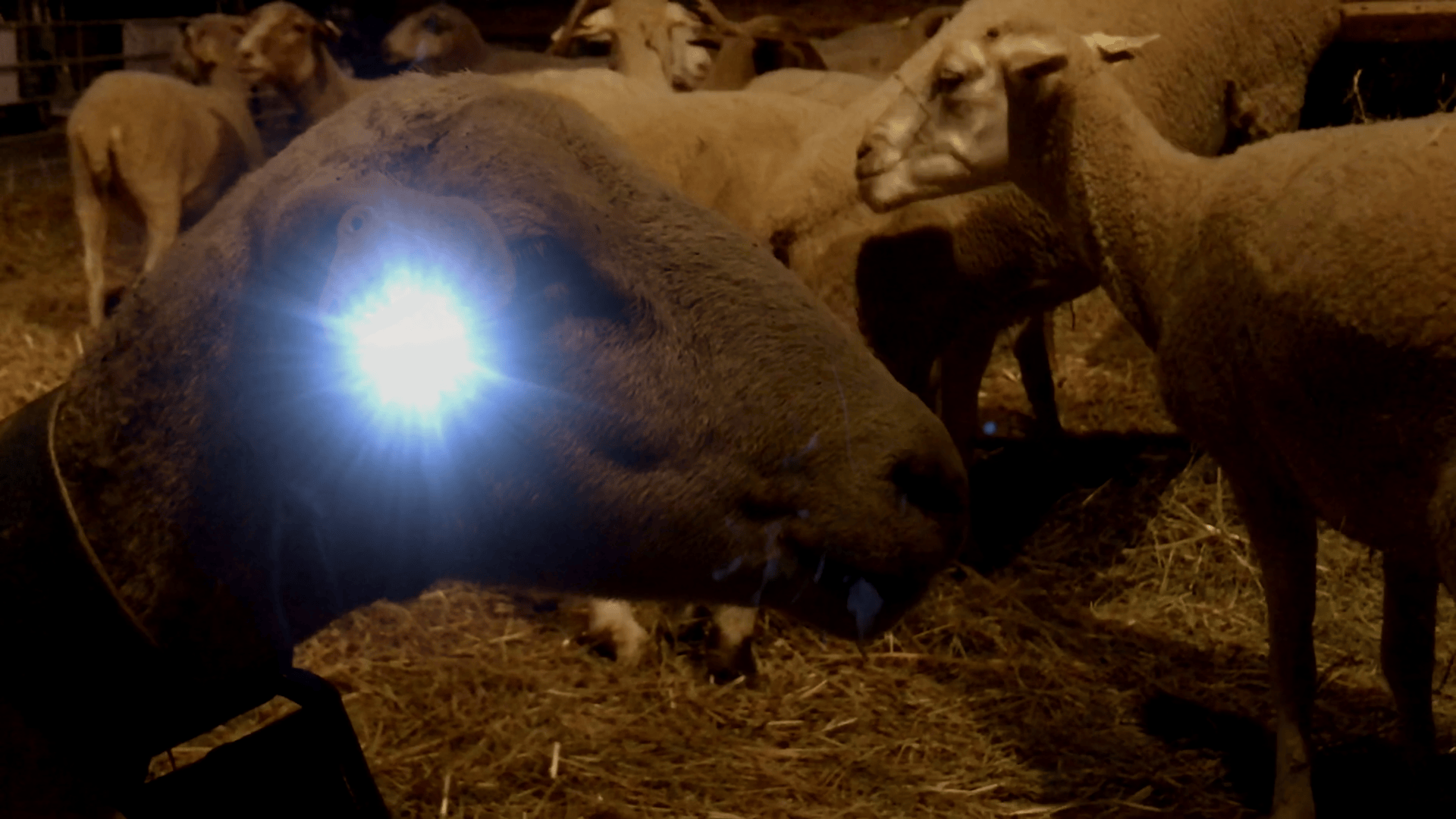
Image courtesy of Commonwealth and Council
Website designed and built by: Companion–Platform
a note On the Dandelion
